Sterilization plays a vital role in pharmaceutical, biotech, healthcare, and food industries. It helps eliminate bacteria, microorganisms, and contaminants from equipment and materials to maintain product quality and safety.
Among the most widely used sterilization equipment are Dry Heat Sterilizers and Autoclave Sterilizers. Although both are used for sterilization, their working principles, applications, and processes are completely different.
In this guide, we will understand the difference between dry heat sterilizer and autoclave sterilizer in detail.

What is a Dry Heat Sterilizer?
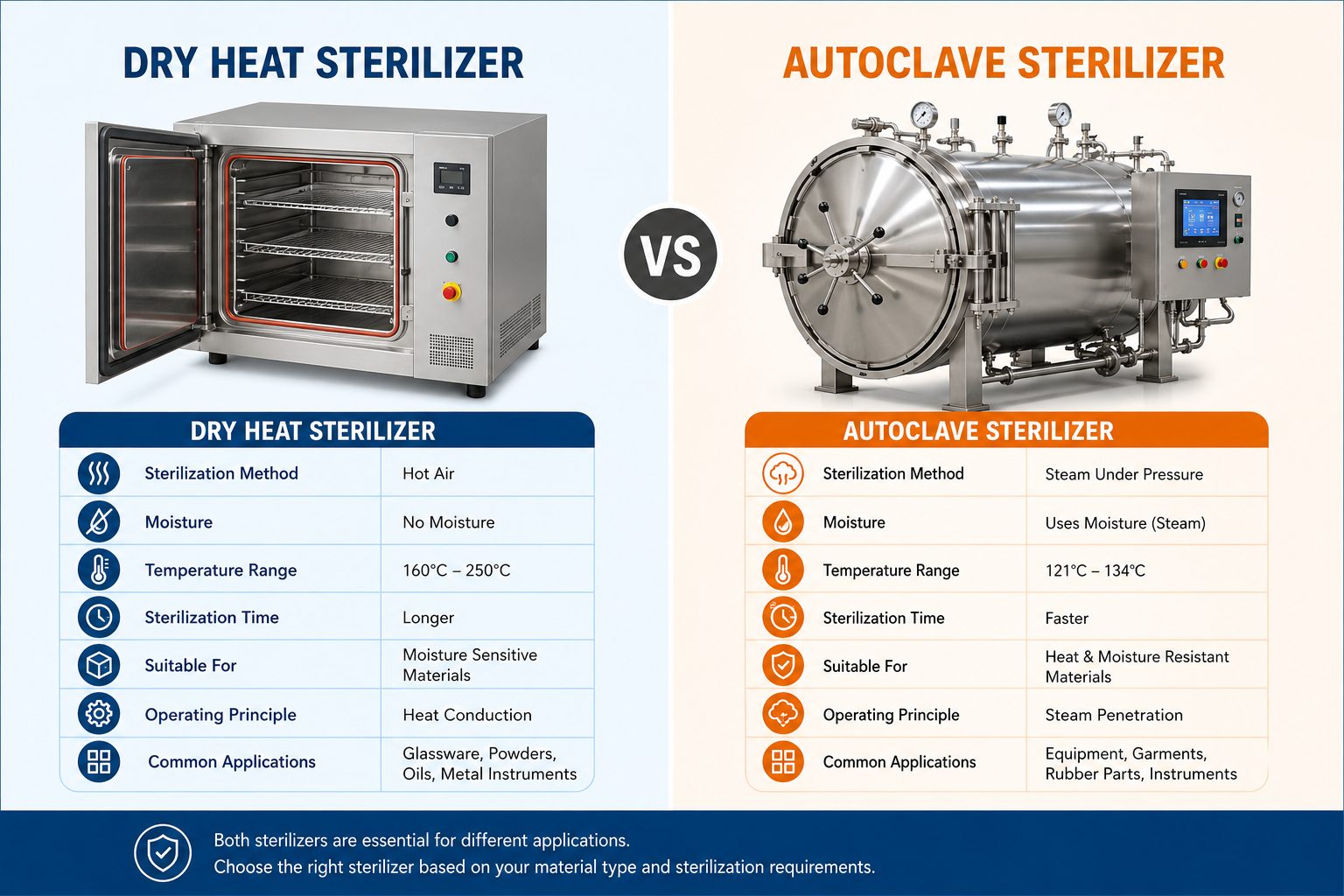
A Dry Heat Sterilizer uses hot air at high temperatures to sterilize equipment and materials. It works without steam or moisture and is mainly used for moisture-sensitive products.
The sterilization process occurs through heat conduction where high temperatures destroy microorganisms and bacterial spores.
Applications of Dry Heat Sterilizer
- Glassware Sterilization
- Metal Instruments
- Pharmaceutical Components
- Powder Materials
- Oils & Chemicals
- Heat Resistant Equipment
What is an Autoclave Sterilizer?
An Autoclave Sterilizer uses high-pressure saturated steam to sterilize materials and equipment. It is one of the most common sterilization systems used in pharmaceutical and healthcare industries.
The steam penetrates materials effectively and destroys harmful microorganisms under controlled temperature and pressure conditions.
Applications of Autoclave Sterilizer
- Surgical Instruments
- Laboratory Equipment
- Pharmaceutical Equipment
- Rubber Components
- Garments
- Stainless Steel Containers
Difference Between Dry Heat Sterilizer and Autoclave Sterilizer
| Feature | Dry Heat Sterilizer | Autoclave Sterilizer |
|---|---|---|
| Sterilization Method | Hot Air | Steam Under Pressure |
| Moisture | No Moisture | Uses Moisture |
| Temperature Range | Higher Temperature | Lower Temperature |
| Sterilization Time | Longer | Faster |
| Suitable For | Moisture Sensitive Materials | Heat & Moisture Resistant Materials |
| Operating Principle | Heat Conduction | Steam Penetration |
| Common Applications | Glassware, Powders, Oils | Equipment, Garments, Rubber Parts |
Advantages of Dry Heat Sterilizer
Suitable for Moisture Sensitive Products
Ideal for materials that can be damaged by steam or moisture.
Corrosion Free Sterilization
Prevents rust and corrosion in metal instruments.
Effective for Powders & Oils
Works efficiently for products unsuitable for steam sterilization.
Advantages of Autoclave Sterilizer
Fast Sterilization Process
Steam sterilization is quicker and highly effective.
Better Penetration
Steam reaches complex surfaces and difficult areas easily.
Reliable Sterility Assurance
Provides consistent sterilization performance for pharmaceutical industries.
Which Sterilizer is Better?
Both sterilizers are important for industrial applications. The choice depends on the material type and sterilization requirements.
Choose Dry Heat Sterilizer For:
- Powders
- Oils
- Glassware
- Moisture Sensitive Products
Choose Autoclave Sterilizer For:
- Pharmaceutical Equipment
- Garments
- Rubber Components
- Laboratory Instruments
Sterile Healthcare – Industrial Sterilization Solutions
Sterile Healthcare provides advanced pharmaceutical sterilization and processing equipment solutions for pharmaceutical, biotech, food, cosmetic, and healthcare industries.
Our product range includes:
- HPHV Autoclave Sterilizer
- Dry Heat Sterilizer
- Terminal Sterilizer
- Pure Steam Generator
- Depyrogenation Tunnel
- Multi Column Distillation Plant
We deliver high-quality engineering solutions designed according to industrial standards and GMP requirements.
Conclusion
Both Dry Heat Sterilizers and Autoclave Sterilizers are essential in pharmaceutical and industrial sterilization processes. Understanding their differences helps industries choose the right equipment for safe and efficient operations.
If you are looking for advanced pharmaceutical sterilization equipment, Sterile Healthcare offers reliable industrial solutions tailored to your manufacturing requirements.

